The History of the Albert Chain

Updated: Aug 5
Albert chains are named after the style of watch chain worn by Queen Victoria's husband, Prince Albert, during the Victorian period. Traditionally, one end featured a T-bar that passed through a waistcoat buttonhole, while the other was fitted with a swivel clasp to secure a pocket watch. The watch would have been kept in a vest pocket with the chain displayed and the chain would have also sometimes suspended a decorative fob.
Before the Albert Chain

The origin of watch chains stretches back much further than the Victorian period.
During the sixteenth century, wealthy Europeans carried large portable spring-driven timepieces known as clock-watches. They would have been suspended from elaborate chains worn around the neck or attached to clothing of wealthy individuals. They were, however, more of a status symbol than a practical instrument, and would have been prized for their novelty rather than their accuracy.
As watchmaking advanced throughout the seventeenth century, portable watches became smaller and more reliable. When Charles II popularised the waistcoat in men's fashionable dress around c.1660, the pocket offered the perfect place to carry a watch securely. Decorative chains evolved alongside them, as they prevented the watch from being lost while also displaying the owner's style and taste.

The Victorian Albert
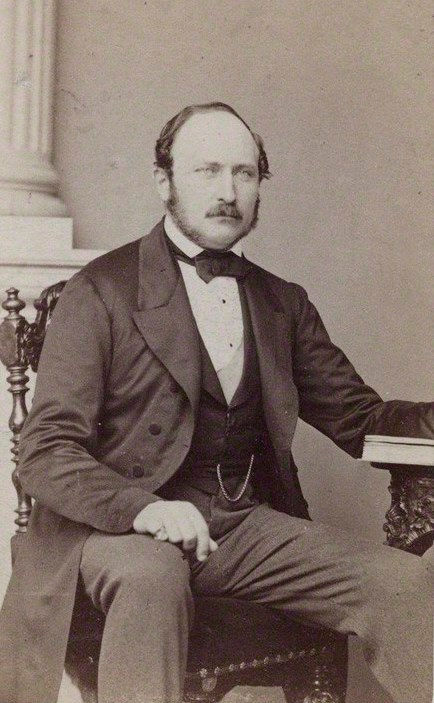
The chain we recognise today emerged during the nineteenth century and became closely associated with Prince Albert (1819–1861). Many portraits depict him wearing a watch chain draped across his waistcoat and following his influence on men's fashion, the style became widely known as the Albert chain.
Whether Prince Albert gave the chain its name during his lifetime or shortly afterwards remains uncertain, but by the 1860s the term was commonly used. Albert chains remained an essential gentleman's accessory well into the Edwardian period.
Traditionally, an Albert chain featured a T-bar at one end, which passed through a waistcoat buttonhole to anchor the chain, and a swivel clasp at the other, securing the pocket watch inside the waistcoat pocket. Many examples also included a short central drop from which a decorative fob, seal, watch key or sovereign could be suspended.

More Than a Practical Accessory
Although practical in function, Albert chains quickly became expressions of personal style. Victorian examples were most commonly made in solid gold or sterling silver, with hand-finished curb, belcher or rope links carefully soldered for strength. Decorative fobs ranged from family crests and bloodstone seals to carved hardstones, lockets and commemorative charms. Every element reflected the Victorian love of symbolism and ornament. By the late nineteenth century, no well-dressed gentleman was considered complete without one.

Albert chains were produced in several forms. The single Albert consists of one principal chain between the T-bar and swivel clasp, usually accompanied by a shorter decorative drop carrying a fob or seal. The double Albert features two equal lengths of chain extending from the T-bar. While one traditionally held the pocket watch, the second often carried a winding key before keyless watches became common. Later it might support a compass, sovereign holder or other gentleman's accessory.

A more decorative variation, known as the Albertina, was designed primarily for women. These lighter chains would be attached to a ladies' pocket watch or chatelaine, and would suspend tassels, engraved spheres, hearts and other decorative motifs, making this practical item piece of jewellery in its own right.
From Pocket Watch to Necklace

The popularity of the Albert chain declined during the 1920s as wristwatches replaced pocket watches for everyday wear. Rather than disappearing, however, many chains were repurposed.
During the First World War, some women began wearing their husbands' or sweethearts' watch chains as necklaces while the men were away serving, keeping these personal possessions close until they returned. This style was popular, with many Albert chains later converted into necklaces or bracelets as fashions changed.
Their substantial gold links, decorative T-bars and original clasps lent themselves perfectly to being reimagined as jewellery, allowing these Victorian accessories to be worn and appreciated by a new generation. By the late twentieth century, converted Albert chains had become a popular way of wearing antique jewellery, and today they are often layered with modern chains or worn alone as statement necklaces.

When purchasing an antique Albert chain, careful examination can reveal a great deal about its history and quality. Its construction can reveal how, when and for whom it was made. The finest examples are crafted in solid gold and usually fully hallmarked, with marks on the T-bar, clasp and sometimes individual links. Sterling silver and rolled gold examples were also widely produced during the late nineteenth and early twentieth centuries, offering a more affordable alternative while retaining the same appearance.
Many Albert chains available today have been converted into necklaces or bracelets. Original T-bars may have been repositioned, additional jump rings or clasps fitted, or the chain shortened to suit modern wear. These adaptations are now considered part of the chain's history and, when carried out well, enhance their wearability without diminishing their charm. Complete full-length Albert chains generally measure between 14 and 16 inches (35–40 cm), making them ideal candidates for conversion into necklaces, while shorter sections were sometimes repurposed as bracelets.
Today, Albert chains remain one of the most versatile pieces of antique jewellery. Some are still worn exactly as intended with pocket watches, while others have been adapted into contemporary necklaces or bracelets.


Comments